
Taytay, Palawan Travel Guide: History, Islands & Nature in Northern Palawan
ToursPalawan Editorial Team
August 13, 2026 8 min read
Travel north through mainland Palawan and, before reaching the internationally famous landscapes of El Nido, you will find a destination with a character distinctly its own.
Taytay, Palawan brings together centuries of history, island scenery, freshwater ecosystems, protected landscapes, and the everyday rhythm of a coastal community. For travelers interested in seeing more of Palawan than its best-known beaches and lagoons, Taytay offers a rewarding reason to slow down and explore.
Rather than being simply a place to pass through, Taytay can become an interesting chapter in a wider northern Palawan journey—especially for travelers drawn to heritage, nature, island adventures, and destinations that remain closely connected to local life.
Begin with the History of Fort Santa Isabel
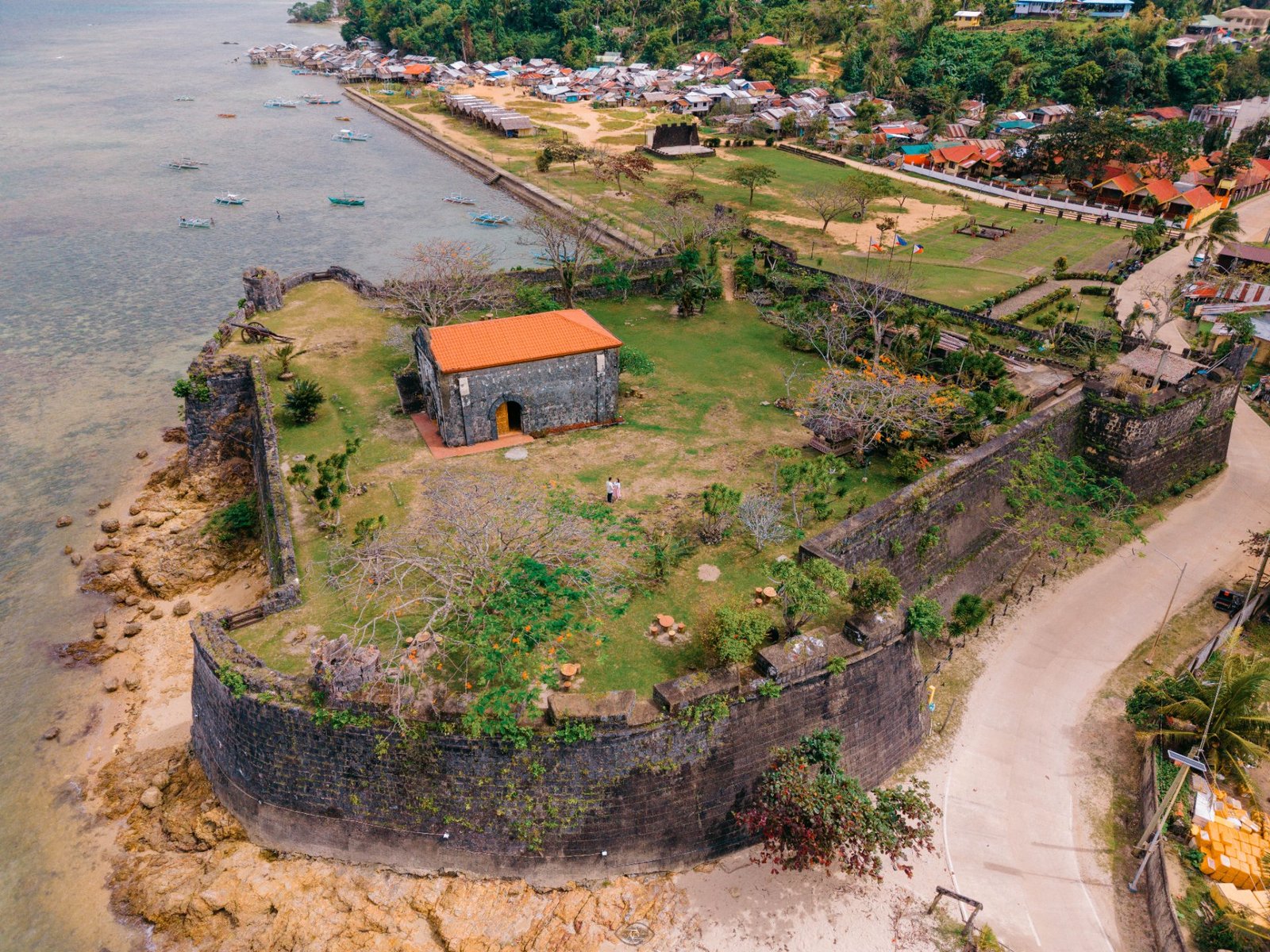
At the heart of Taytay's historic identity stands Fort Santa Isabel, locally known as Kuta.
Positioned beside the waterfront in Poblacion, the fort is one of Palawan's surviving Spanish-era fortifications. According to the National Historical Commission of the Philippines, Recollect missionaries first constructed a wooden fort here in 1667. It was later rebuilt in stone, with four bastions, during the 18th century.
The fort served as a defensive stronghold overlooking the waters around Taytay and formed part of the Spanish colonial presence in what was then known as Paragua, the historical name associated with Palawan.
Today, its thick stone walls offer travelers a tangible connection to a side of Palawan's past that can easily be overlooked amid the province's reputation for beaches and tropical islands.
Take time to walk around the grounds and look across Taytay Bay. Late afternoon can be particularly pleasant as the light softens over the waterfront.
Opening arrangements and visitor policies can change, so it is sensible to confirm current information locally before visiting.
Explore the Islands of Taytay Bay
Beyond the historic town center, Taytay opens onto a broad coastal landscape of islands, beaches, rocky formations, reefs, and tropical waters.
Local island-hopping excursions can provide opportunities for swimming, snorkeling, beach visits, and simply enjoying the scenery from a traditional Filipino outrigger boat, commonly known as a bangka.
Among the islands associated with Taytay is Pabellon Island, also known locally as Elephant Island, a destination noted for its rock formations, beaches, coral areas, and lagoon.
Exactly which islands can be visited will depend on the operator, weather, sea conditions, local access arrangements, and environmental regulations.
For international travelers accustomed to fixed tour schedules, it is worth remembering that island travel in Palawan is influenced heavily by nature. A planned route may need to change if conditions at sea are unsuitable.
Choose established local tour operators, follow the instructions of your boat crew and guides, and treat safety decisions as part of responsible island travel.
Discover Lake Manguao
Taytay's attractions are not limited to the sea.
Inland lies Lake Manguao, a freshwater lake surrounded by forested landscapes and recognized for its ecological importance and birdlife.
The Tourism Promotions Board of the Philippines has highlighted Lake Manguao as a nature destination and birdwatching area, while conservation initiatives have emphasized the importance of protecting the lake and its surrounding ecosystem.
For travelers, the lake reveals another dimension of northern Palawan—one defined less by white-sand beaches and more by freshwater, forest, wildlife, and quiet landscapes.
It is best approached as a nature destination rather than a heavily developed tourist attraction.
Access conditions and available activities may change, so travelers interested in visiting Lake Manguao should seek current advice from their accommodation, a knowledgeable local guide, or the tourism authorities before making the trip.
Understand the Importance of Malampaya Sound
One of Taytay's most significant natural areas lies on the municipality's western side.
Malampaya Sound Protected Landscape and Seascape encompasses terrestrial and marine environments within Taytay and neighboring San Vicente. It was formally declared a protected area by the Philippine government in 2000.
Its ecosystems include mangroves, seagrass areas, coral environments, forests, and important aquatic habitats.
The area is also ecologically significant because the inner sound provides habitat for a critically endangered population of Irrawaddy dolphins, while other threatened and endemic species occur throughout the protected landscape and seascape.
This does not mean travelers should expect—or attempt—to seek close encounters with these animals.
Wildlife should never be treated as a guaranteed attraction. Sensitive species are better appreciated by understanding why their habitat needs protection and by ensuring that tourism activities do not disturb them.
If visiting areas within or near protected ecosystems, follow local regulations and the guidance of authorized operators or knowledgeable local guides.
Experience the Quieter Side of Taytay
Some of Taytay's appeal comes from experiences that do not appear on a sightseeing checklist.
Spend time around the town center and waterfront and you will see fishing boats moving across the bay, residents going about their daily routines, small businesses serving the community, and tourism existing alongside ordinary coastal life.
For travelers who enjoy destinations beyond highly developed tourism zones, this slower pace can be part of the experience.
Have a meal at a local restaurant. Walk near the waterfront. Talk with your accommodation host about places worth visiting. Give yourself enough time at the fort rather than immediately returning to the highway.
Travel is sometimes most memorable when there is room to observe a destination instead of moving constantly from one attraction to the next.
When Is the Best Time to Visit Taytay, Palawan?
The Philippines has a tropical and maritime climate, so warm temperatures, humidity, and changing weather conditions should be expected throughout the year.
In general, the country's dry season runs from December to May, while the rainy season is typically associated with June to November. Local rainfall patterns, however, vary across the Philippines, including within Palawan.
For travelers planning island hopping or other outdoor activities, weather on the actual day of travel matters more than choosing a supposedly perfect month.
Sea conditions can change, and boat operators may alter or cancel trips when conditions are unsuitable.
Build some flexibility into your itinerary, particularly if an island excursion is one of the main reasons for visiting Taytay. Before departing, check current weather and marine advisories and confirm arrangements with your tour operator.
How to Get to Taytay, Palawan
Taytay is located on the northern mainland of Palawan and is connected by road with Puerto Princesa, El Nido, Roxas, and other municipalities along the island's main transport corridor.
From Puerto Princesa
Travelers arriving in Palawan through Puerto Princesa can continue north to Taytay by road. Depending on current operations, transportation may include buses, passenger vans, or private transfers.
From El Nido
Travelers already staying in El Nido can travel south by road to Taytay, making the municipality a practical addition to a northern Palawan itinerary.
Because transportation companies, departure times, pickup points, and road conditions can change, avoid relying on old timetables found in travel blogs.
Confirm your transportation shortly before your journey through your accommodation, transport provider, tour operator, or other current local source.
Travel Responsibly in Taytay
Taytay's appeal is inseparable from the natural environments and communities that make the destination possible.
Responsible travel does not need to be complicated.
Avoid leaving waste on beaches, islands, lakeshores, and trails. Reduce single-use plastics when practical. Do not collect coral, shells, plants, or wildlife as souvenirs. Follow rules inside protected areas and maintain an appropriate distance from animals.
When visiting communities outside established tourism areas, remember that these are places where people live and work—not attractions created exclusively for visitors.
Choosing locally based accommodations, restaurants, guides, boat operators, transport providers, and other legitimate tourism businesses can also help direct more of the economic benefits of tourism into the communities travelers visit.
Enjoying Palawan and helping preserve it should be part of the same journey.
Is Taytay Worth Visiting?
Yes—especially if you want to experience more than Palawan's most famous destinations.
Taytay should not be viewed simply as an alternative version of El Nido or Coron. Its appeal is different.
Here, you can explore the walls of a centuries-old fort, travel across island-dotted waters, discover a forest-fringed freshwater lake, learn about an important protected seascape, and spend time in a working coastal municipality.
That combination of history, islands, nature, and local character gives Taytay its own place within a Palawan itinerary.
Travelers with a tight schedule may see Taytay only from the road. Those with more time can discover what lies beyond it.
So when planning your journey through northern Palawan, consider staying rather than simply passing through.
You may find that Taytay becomes one of the places that gives you a deeper understanding of Palawan—not only as a tropical destination, but as a province shaped by history, communities, and extraordinary natural environments.
Was this article helpful?
Log in to vote.